Today we caught the Circumvesuviana train in order to travel back in time to AD 79. No, we weren't becoming Dr. Who companions. Our destination was Pompeii, a city famous for being preserved in volcanic stone until it was discovered in 1594. Pompeii had the misfortune of being located a stone's throw from the active volcano Vesuvius. Today Vesuvius remains the only active volcano on the European mainland though there's another offshore in Sicily.
Despite the discovery, excavation of Pompeii did not begin until 1748 and as of today only two-thirds is complete. Given the state of the Italian economy this last third may take awhile.
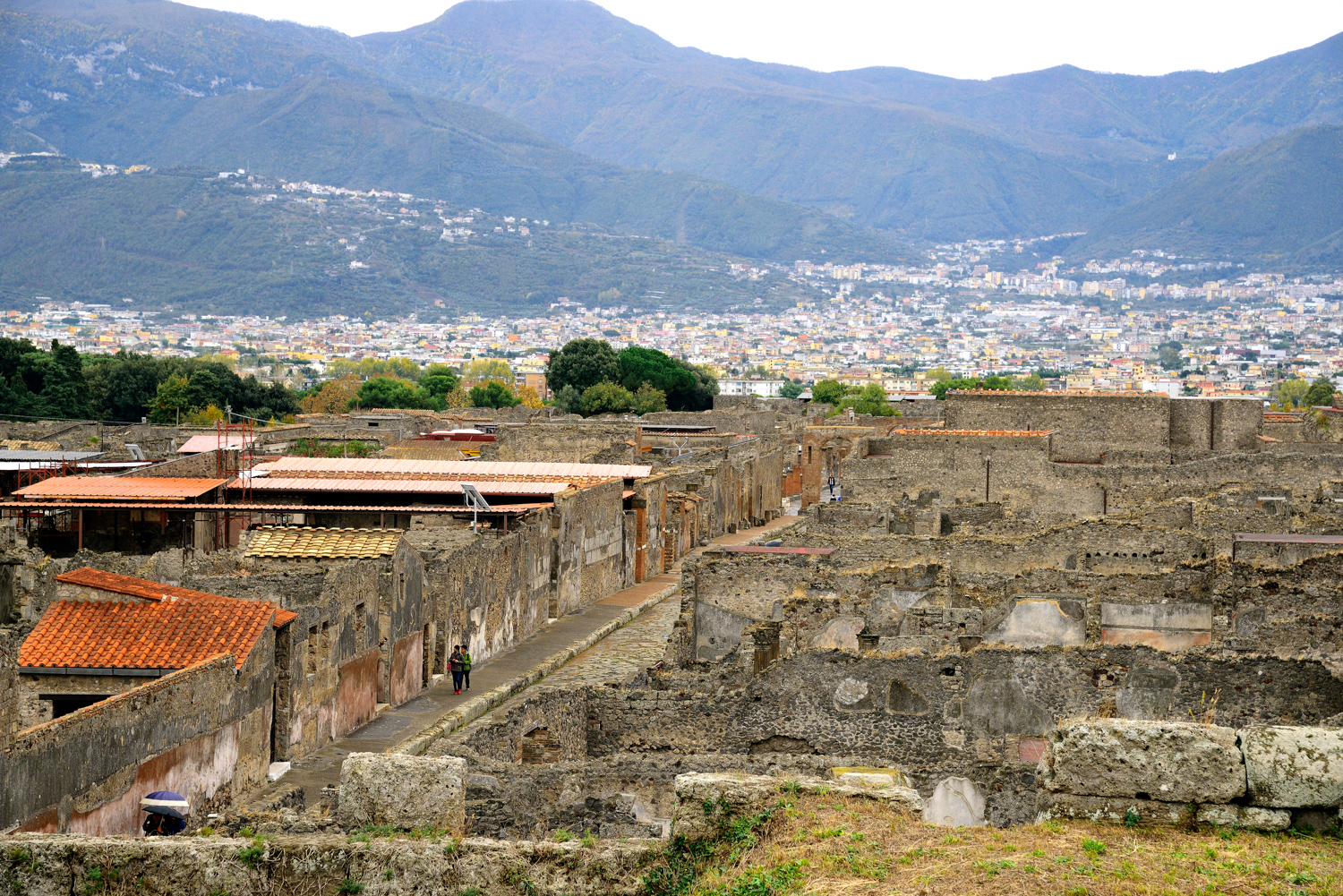
Walking through what remains of Pompeii is not unlike walking through Ephesus or Macchu Picchu. Stone (what else would survive hundreds of years?) streets and walls in various states of decay.
I'm no archaeologist but to me Ephesus is the least interesting of the three. It's a jumble of rocks and columns in a not-very-interesting part of Turkey. Machu Picchu, on the other hand, is a complete city composed of beautifully crafted and placed stone. Furthermore, Machu Picchu is built on a lush mountaintop and surrounded by spectacular mountain vistas.
Pompeii is more like Machu Picchu. Not quite as impressive but impressive nevertheless. It's a complete city which tells a story and offers plenty of interesting spaces for exploration.
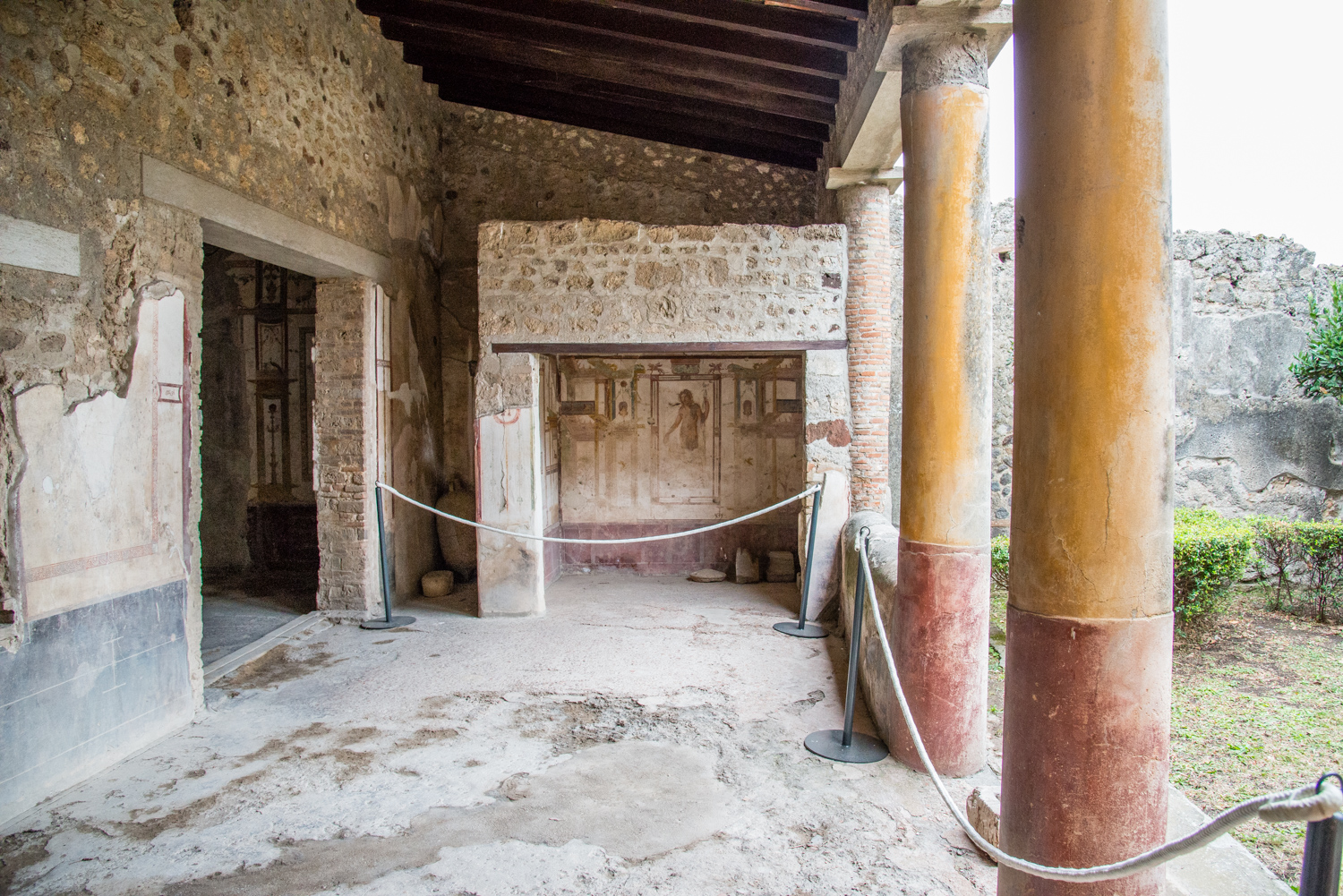
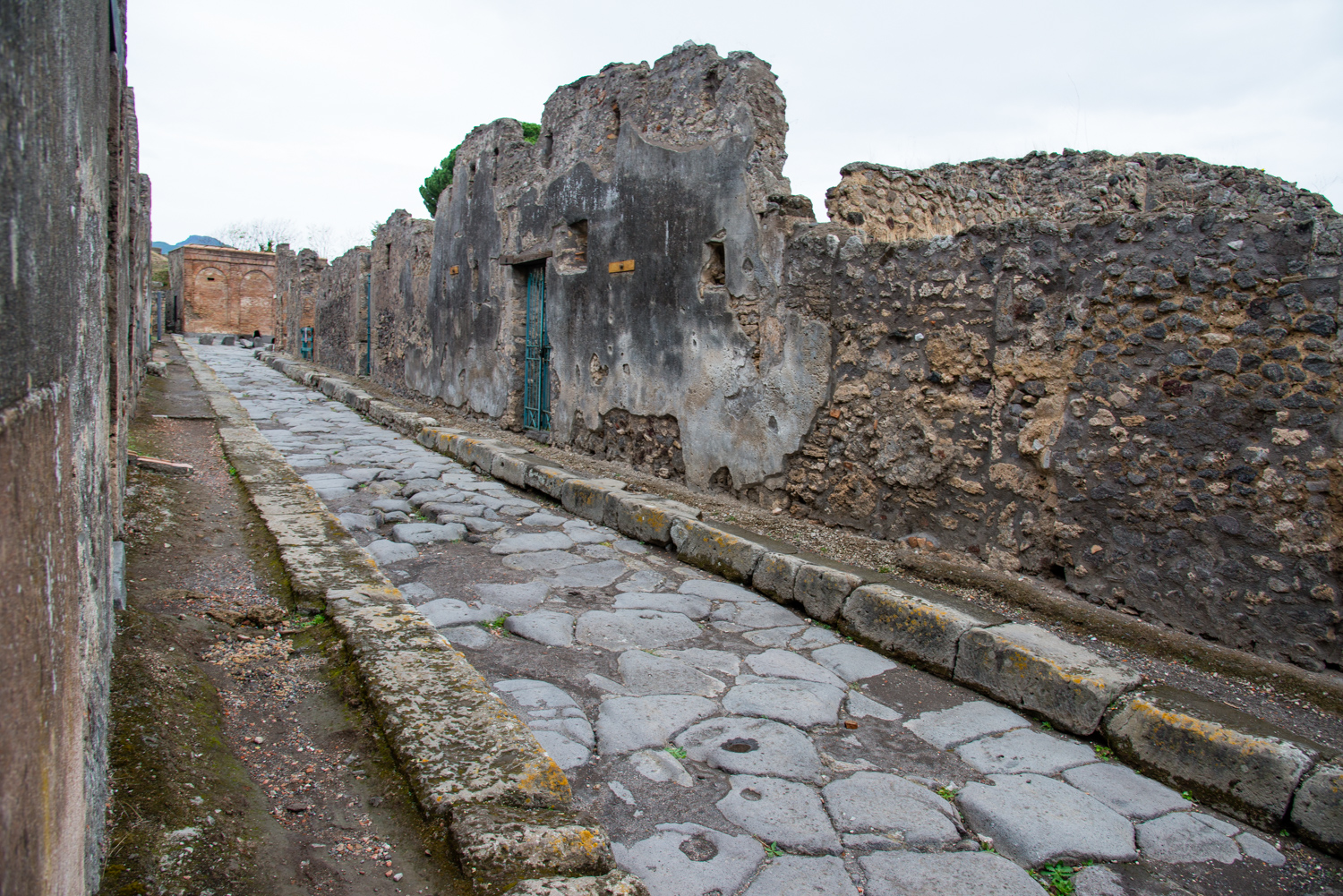
Pompeii features stone streets that doubled as sewers, fountains, murals, mosaics, even counters with built-in holes to hold hot food (I thought the holes were toilets until the guidebook said otherwise).
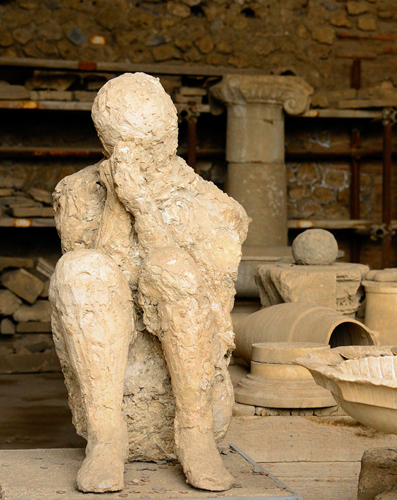
Many of the artifacts discovered in Pompeii were removed from the site and placed in Naples' Museo Archeologico Nazionale.
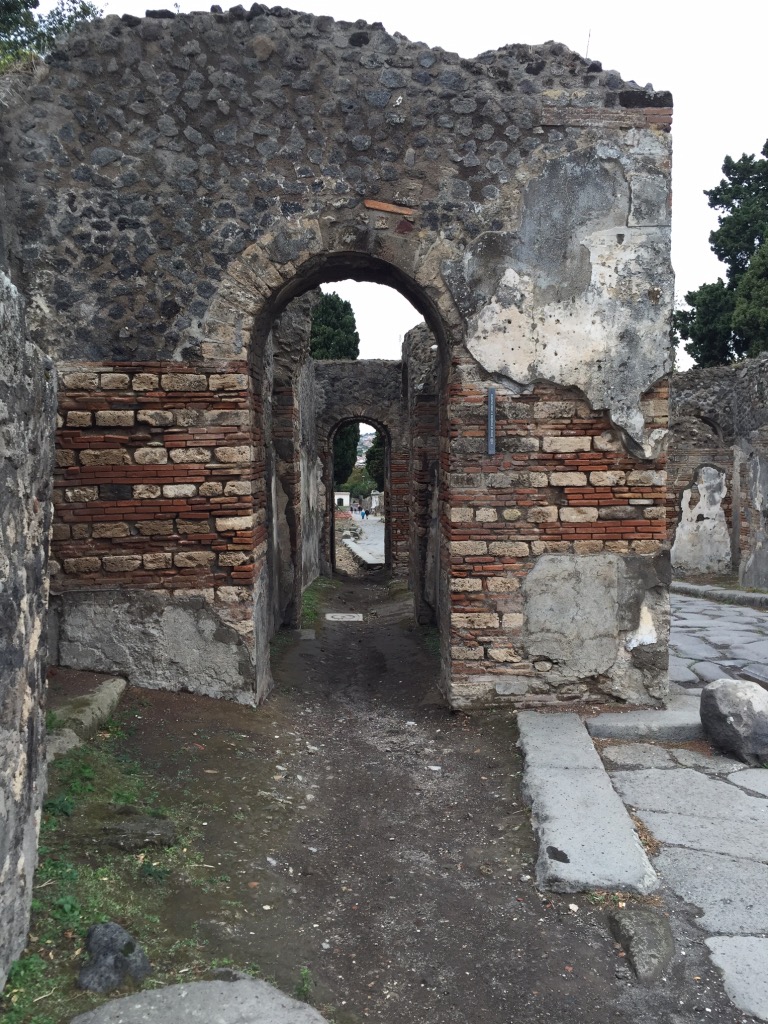
The accompanying picture is a bit of Pompeii and not the most interesting bit at that, but it will have to do. I shoot with an iPhone to have something to accompany my posts, but the better shots will appear once I'm home and can download/process them from the dslr.