Frans Hals the Elder (1582 to 1666) was a Dutch golden age (roughly 1588 to 1672) painter. Hals is known for his portraits, mainly of wealthy citizens, and his portraits for institutional groups. He gained fame among his patrons as well as other painters for his mastery of a technique that once was seen as a flaw in painting, the visible brushstroke, which gives his portraits movement and brings his subjects to life.
Hals was born in Antwerp but his family moved to Haarlem to avoid some troublesome Spanish people. Haarlem, being Hals' home, is also home to the Frans Hals Museum. The Frans Hals Museum has the largest collection of his works in the world. The museum is a short walk from our apartment.
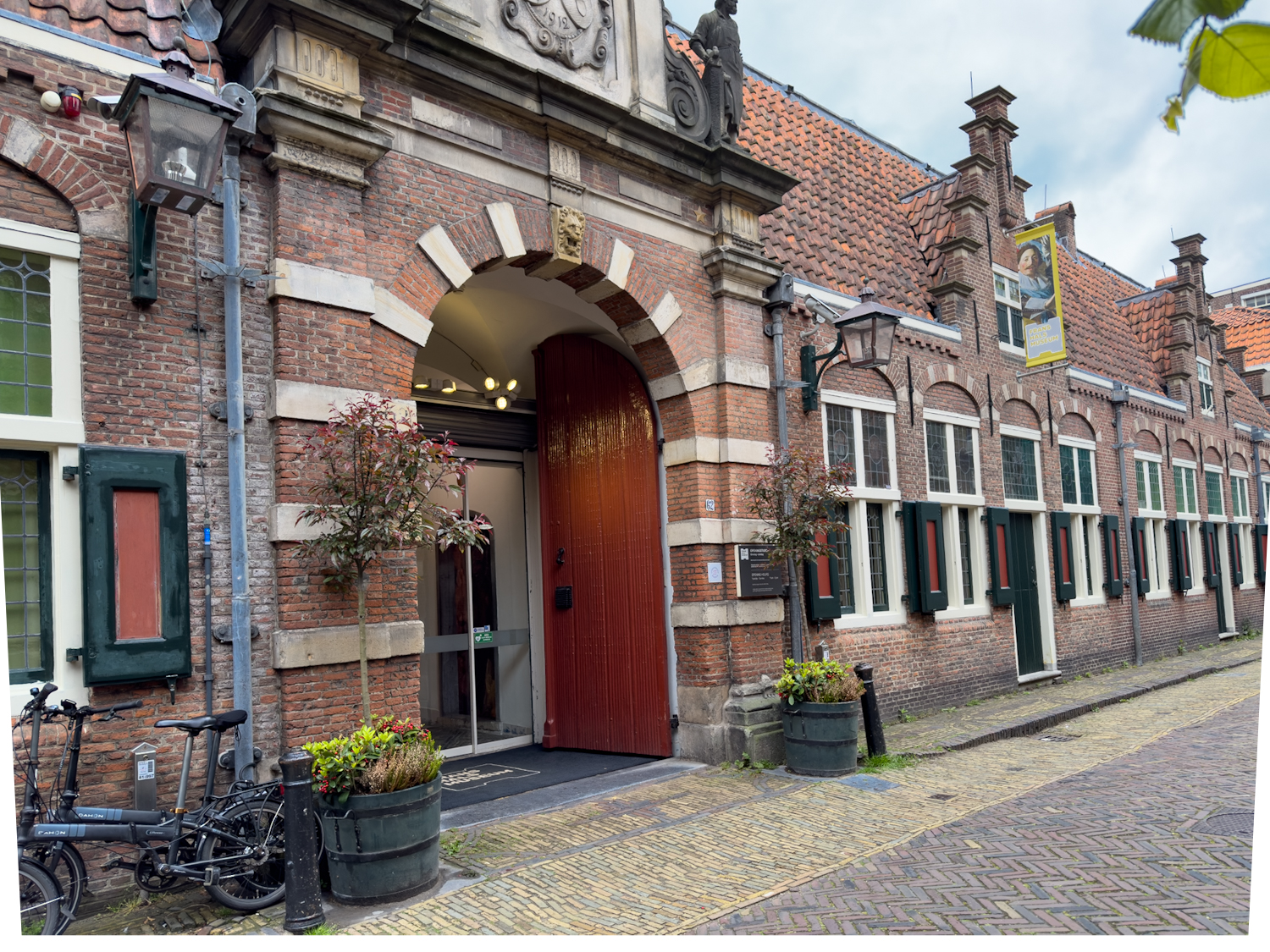
The Frans Hals Museum is located in what was a 17th-century oudemannenhuis or old men's almhouse. The residential rooms were situated around a courtyard. Each of the thirty rooms was inhabited by two men. To be eligible to living there a man had to be at least 60 years old, an honest Haarlem resident, and single. Each resident was required to provide their own household goods: a bed, a chair with cushion, a tin chamberpot, three blankets, six good shirts and six nightcaps. The men were locked in each night at eight o'clock in the summer and at seven in the winter.
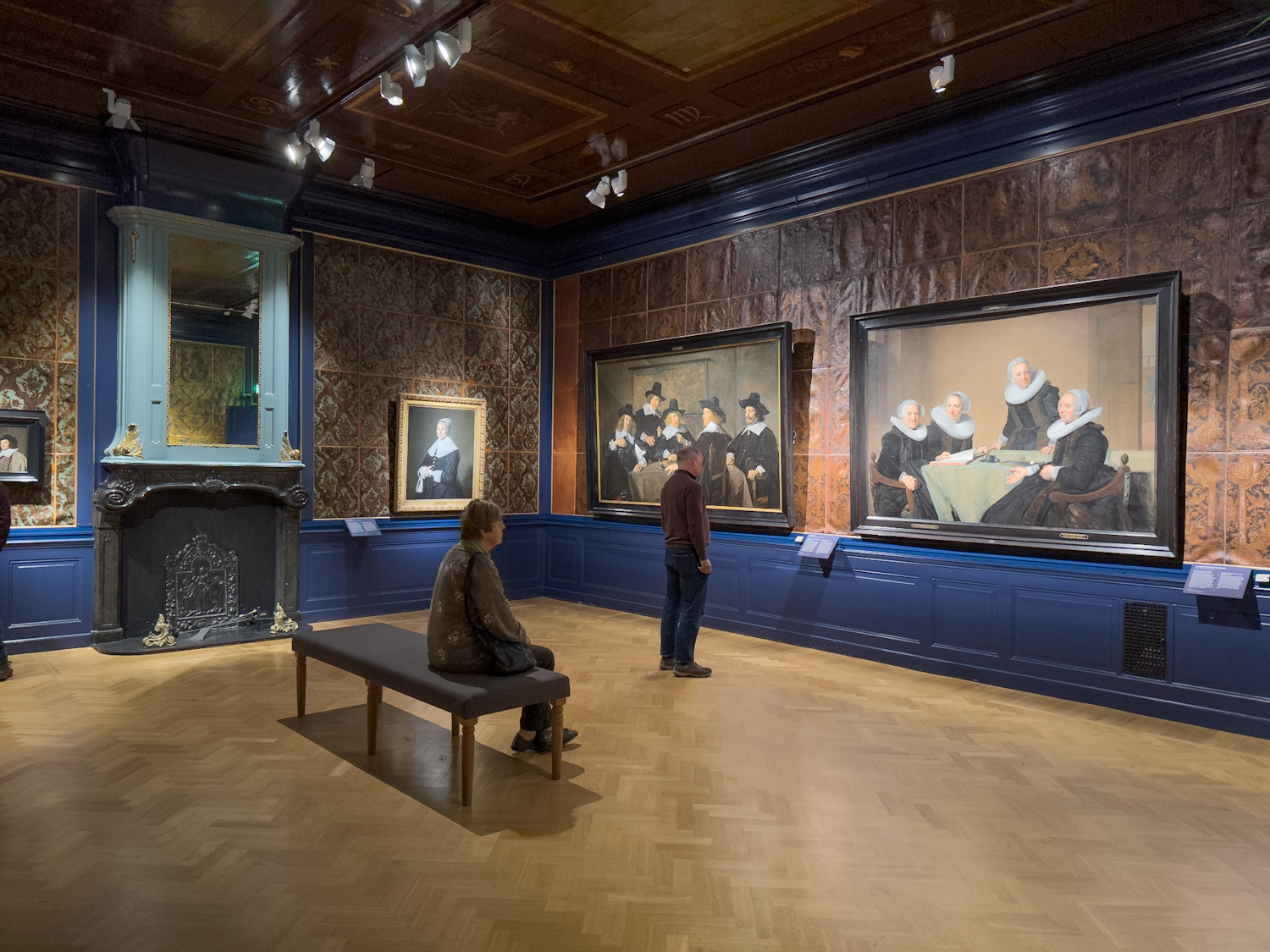
Here are a few paintings, most but not exclusively by Hals, currently on display at the museum, plus the text that accompanies them.
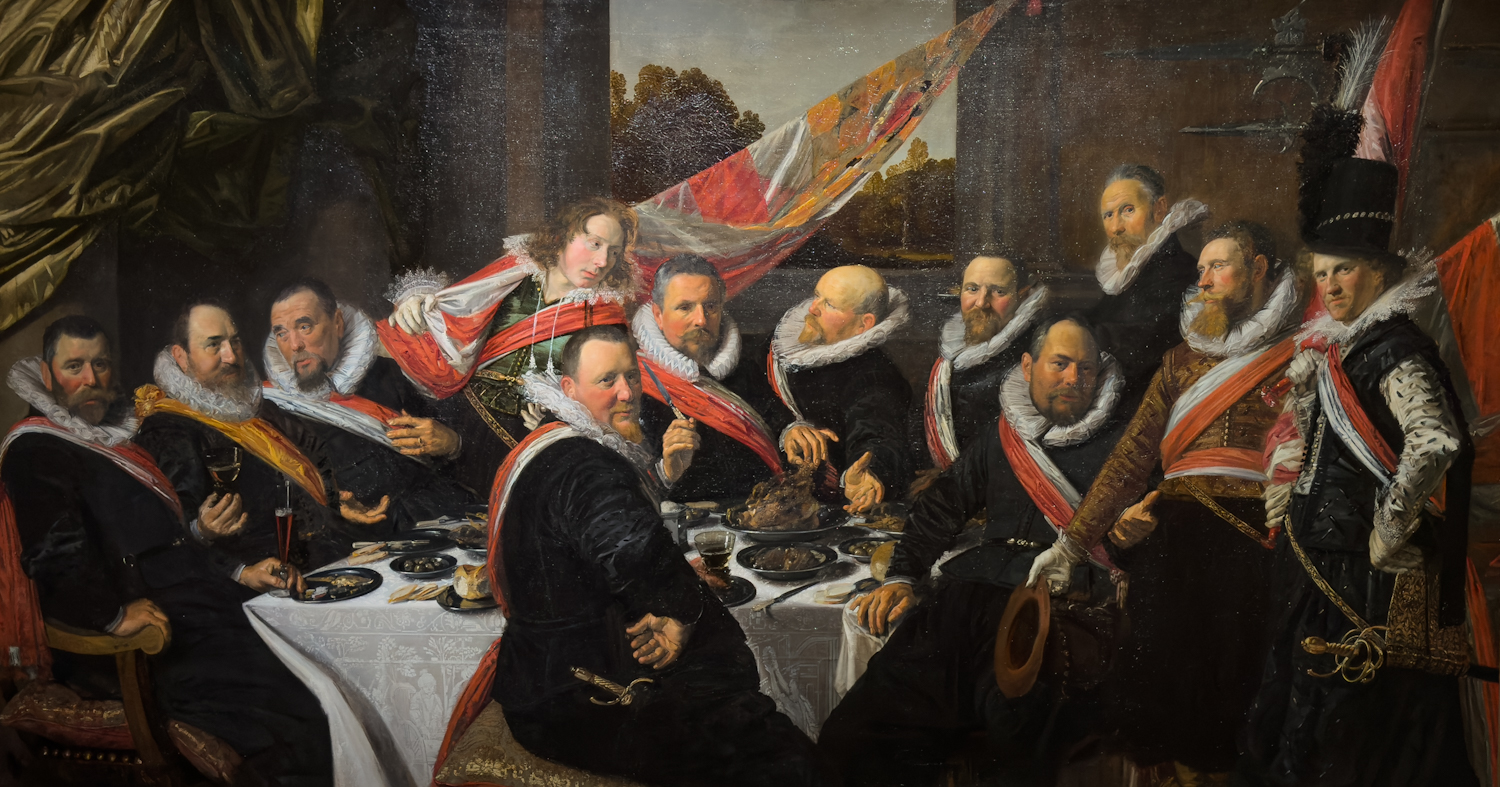
Hals' earliest civic guard painting is full of life and movement, the artists huge talent already apparent in his very first large commission. The men are enjoying a banquet to celebrate the end of their time as officers of the civic guard. On the left are the colonel and captains, the highest ranking officers. Further to the right are the lieutenants. In the centre background and to the right are the standard bearers. Some of the officers look up at us, as if we had just entered the room.
Hals' earliest civic guard painting is full of life and movement, the artists huge talent already apparent in his very first large commission. The men are enjoying a banquet to celebrate the end of their time as officers of the civic guard. On the left are the colonel and captains, the highest ranking officers. Further to the right are the lieutenants. In the centre background and to the right are the standard bearers. Some of the officers look up at us, as if we had just entered the room.
Hals' earliest civic guard painting is full of life and movement, the artists huge talent already apparent in his very first large commission. The men are enjoying a banquet to celebrate the end of their time as officers of the civic guard. On the left are the colonel and captains, the highest ranking officers. Further to the right are the lieutenants. In the centre background and to the right are the standard bearers. Some of the officers look up at us, as if we had just entered the room.
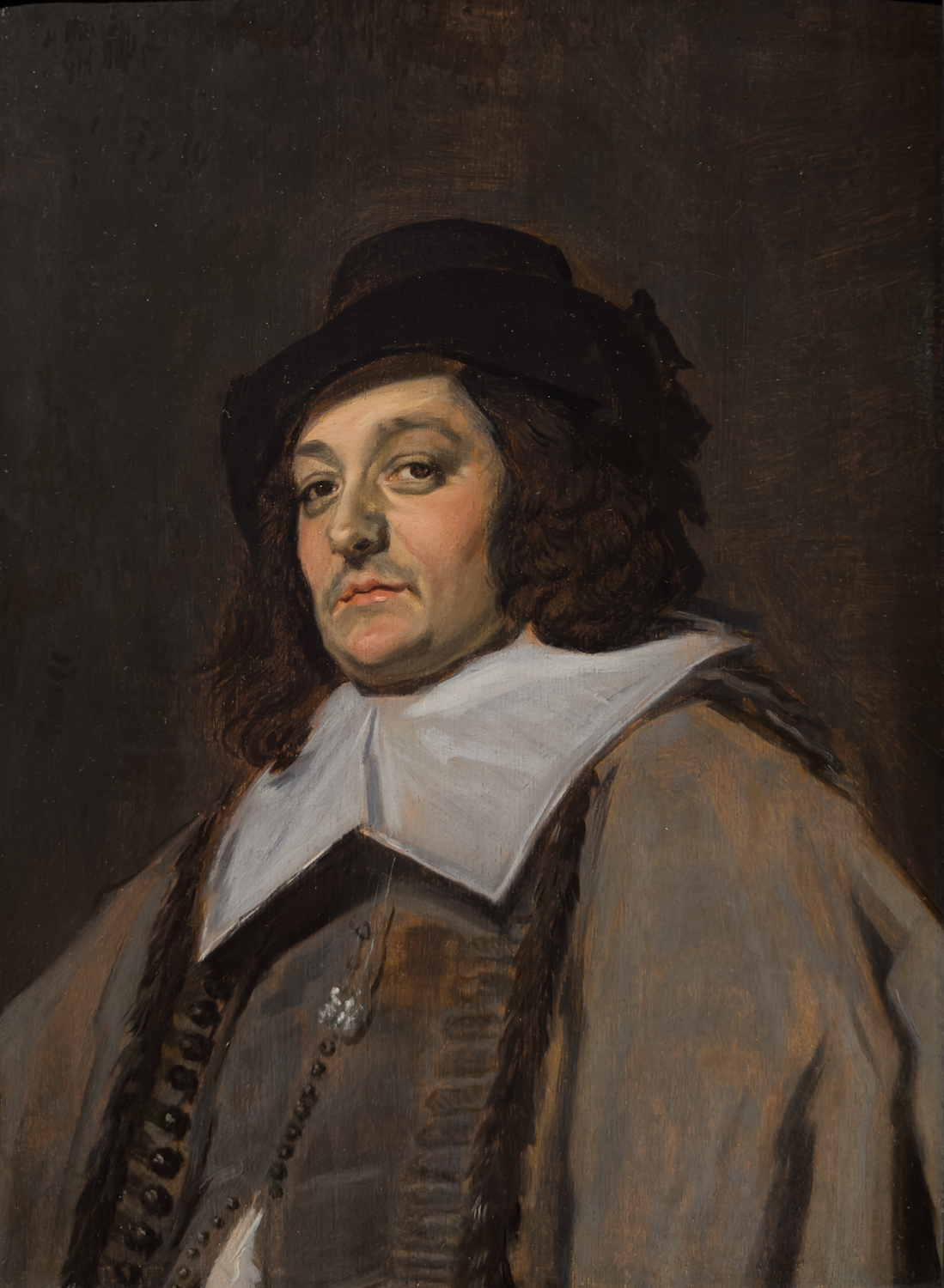
In the 17th century, artists often spent several sessions working on a portrait. This small portrait of a man wearing a traveller's cape is an exception: Frans Hals made it in a single sitting. He painted it wet-on-wet, using different colours without waiting for the previous layer to dry. It is testimony to Hals's remarkable skill. The traveller would have been able to take his portrait home straightaway. Yet he would have had to be careful: oil paint is slow to dry.
In the 17th century, artists often spent several sessions working on a portrait. This small portrait of a man wearing a traveller's cape is an exception: Frans Hals made it in a single sitting. He painted it wet-on-wet, using different colours without waiting for the previous layer to dry. It is testimony to Hals's remarkable skill. The traveller would have been able to take his portrait home straightaway. Yet he would have had to be careful: oil paint is slow to dry.
In the 17th century, artists often spent several sessions working on a portrait. This small portrait of a man wearing a traveller's cape is an exception: Frans Hals made it in a single sitting. He painted it wet-on-wet, using different colours without waiting for the previous layer to dry. It is testimony to Hals's remarkable skill. The traveller would have been able to take his portrait home straightaway. Yet he would have had to be careful: oil paint is slow to dry.
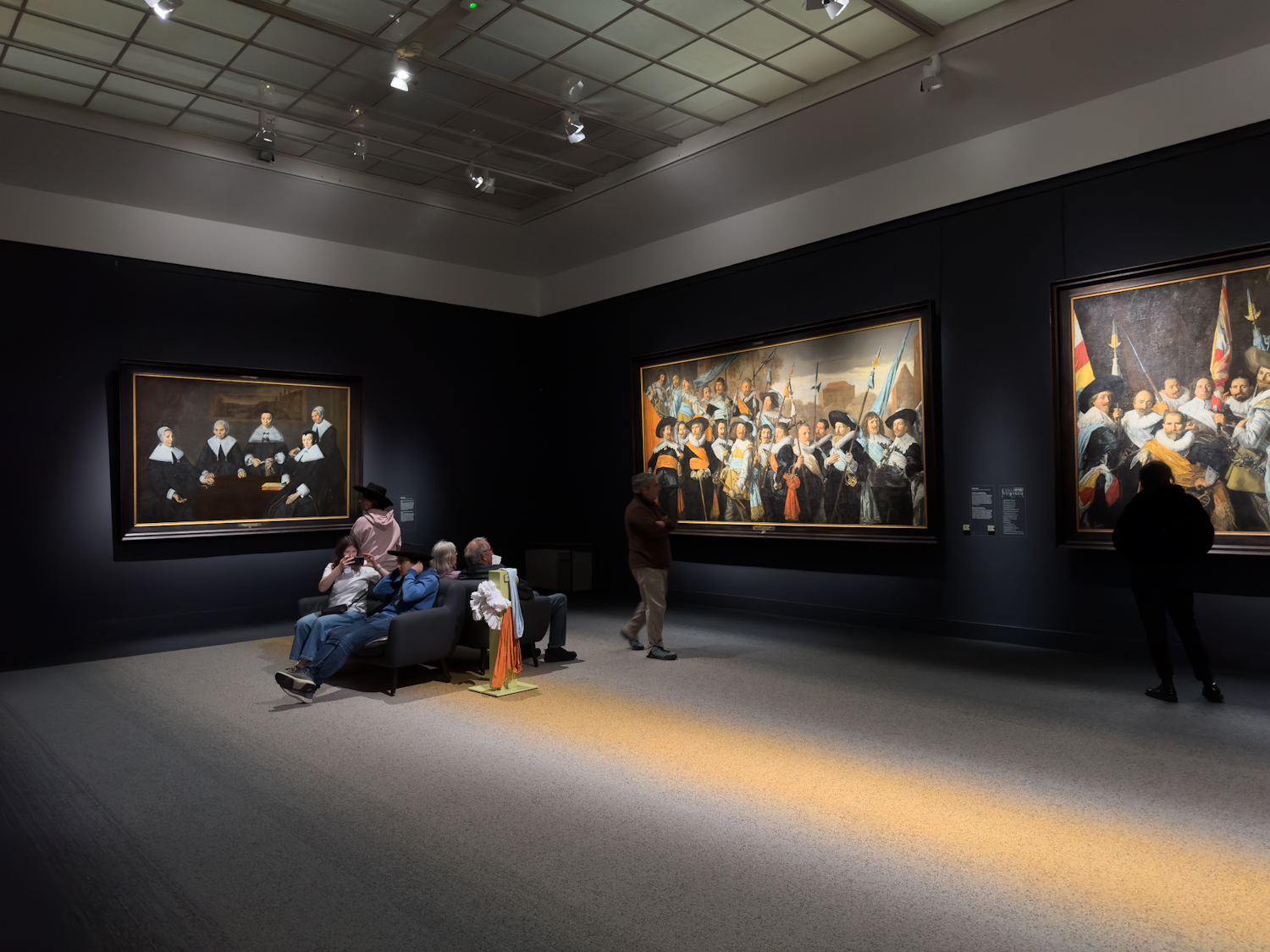
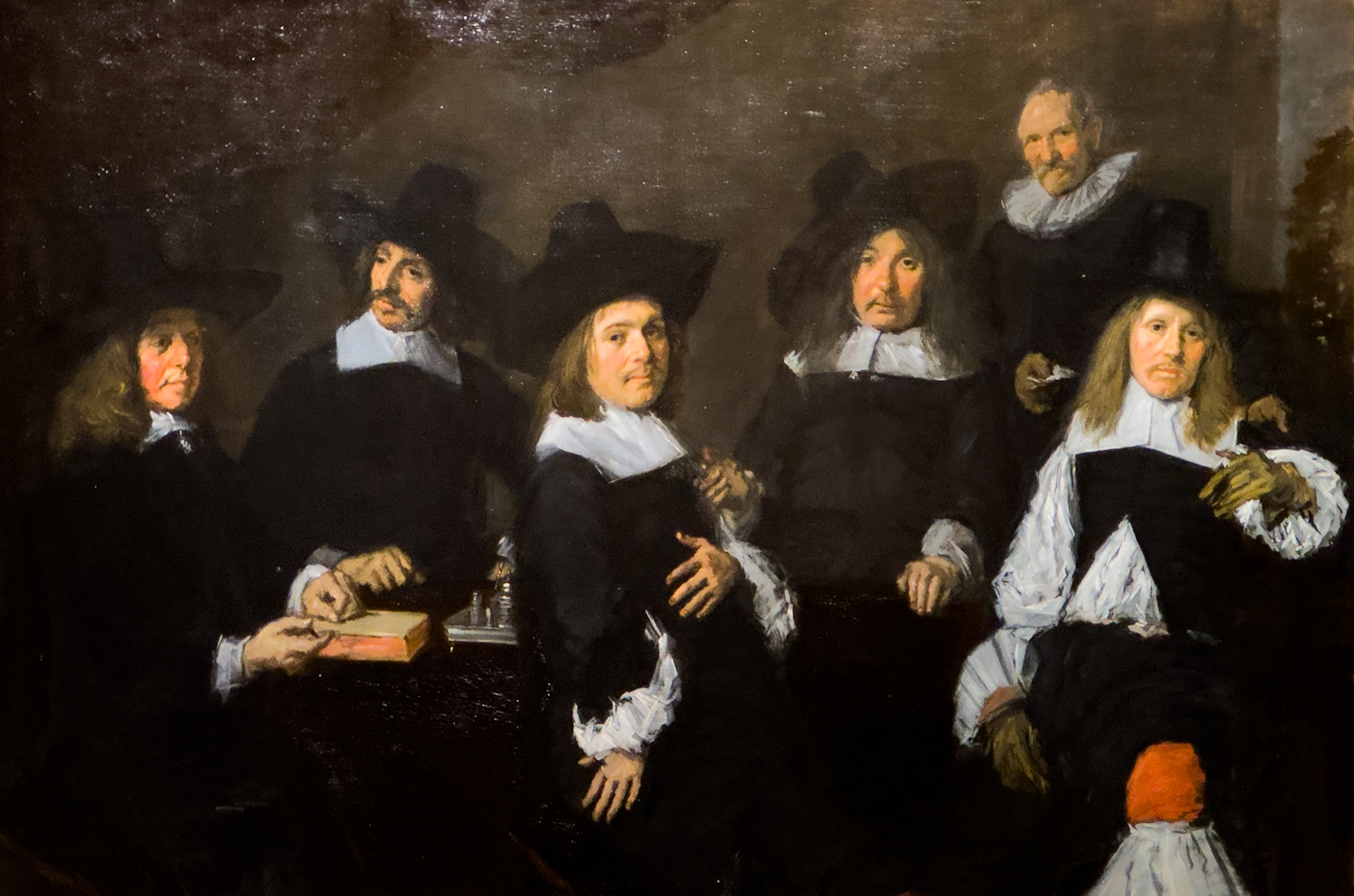
Haarlem has a long tradition of large group portraits, depicting the members of local associations or civic guards, for example. These militias were a combination of volunteer police, fire brigade and army. The oldest of these paintings, which date from the early 16th century, are dignified and serious, like the portrait of the Haarlem Brotherhood of Jeruzalem Pilgrims by Jan van Scorel here in this room. Cornelis van Haarlem painted the first Haarlem civic guards portrait towards the end of the 16th century. It is remarkably lively.
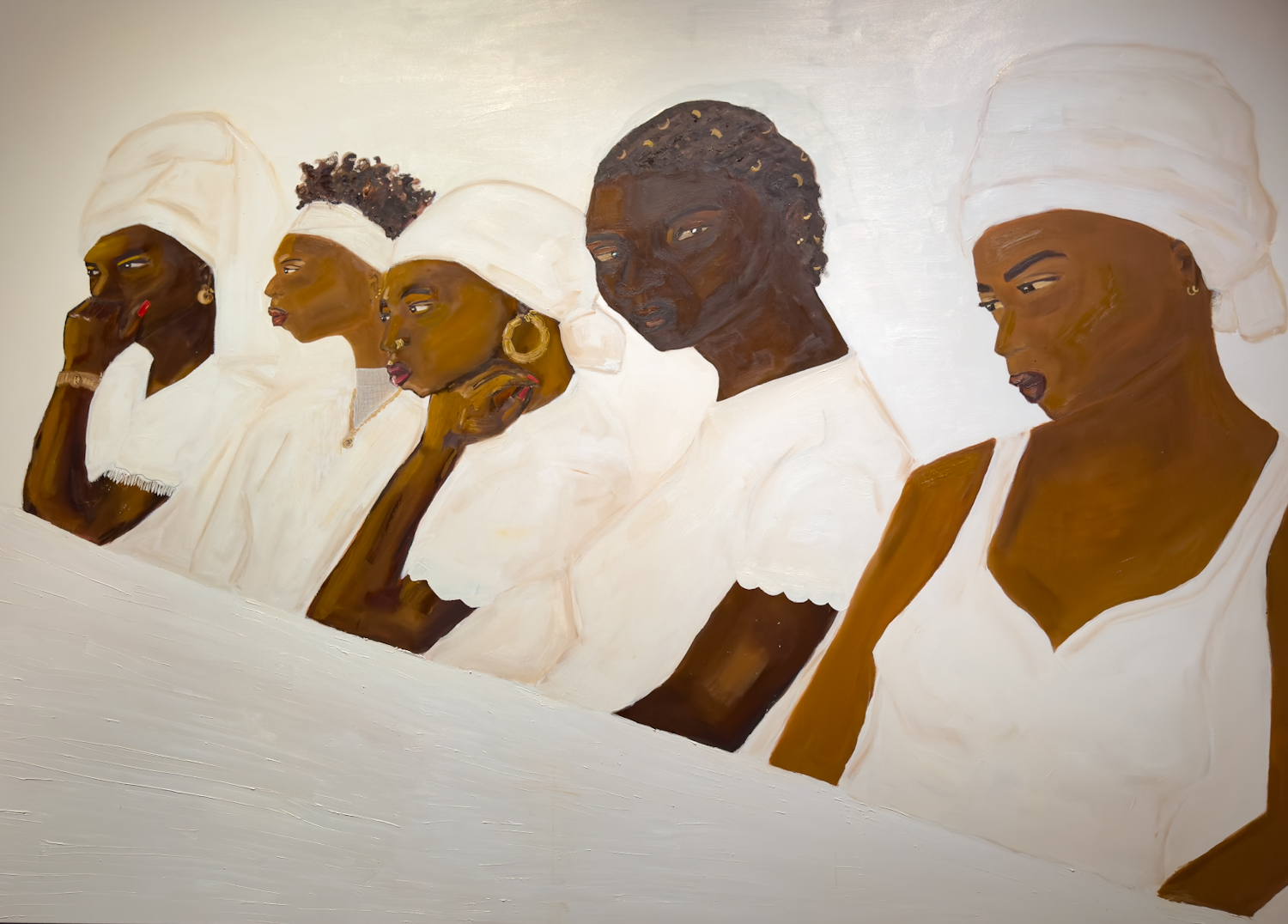
In 2024 the museum commissioned Iriée Zamblé to paint a new Haarlem group portrait. The resulting work features a group of Black women. The white in the painting refers to the famous Haarlem linen, which also appears in the old civic guard paintings.
Haarlem has a long tradition of large group portraits, depicting the members of local associations or civic guards, for example. These militias were a combination of volunteer police, fire brigade and army. The oldest of these paintings, which date from the early 16th century, are dignified and serious, like the portrait of the Haarlem Brotherhood of Jeruzalem Pilgrims by Jan van Scorel here in this room. Cornelis van Haarlem painted the first Haarlem civic guards portrait towards the end of the 16th century. It is remarkably lively.
In 2024 the museum commissioned Iriée Zamblé to paint a new Haarlem group portrait. The resulting work features a group of Black women. The white in the painting refers to the famous Haarlem linen, which also appears in the old civic guard paintings.
Haarlem has a long tradition of large group portraits, depicting the members of local associations or civic guards, for example. These militias were a combination of volunteer police, fire brigade and army. The oldest of these paintings, which date from the early 16th century, are dignified and serious, like the portrait of the Haarlem Brotherhood of Jeruzalem Pilgrims by Jan van Scorel here in this room. Cornelis van Haarlem painted the first Haarlem civic guards portrait towards the end of the 16th century. It is remarkably lively.
In 2024 the museum commissioned Iriée Zamblé to paint a new Haarlem group portrait. The resulting work features a group of Black women. The white in the painting refers to the famous Haarlem linen, which also appears in the old civic guard paintings.
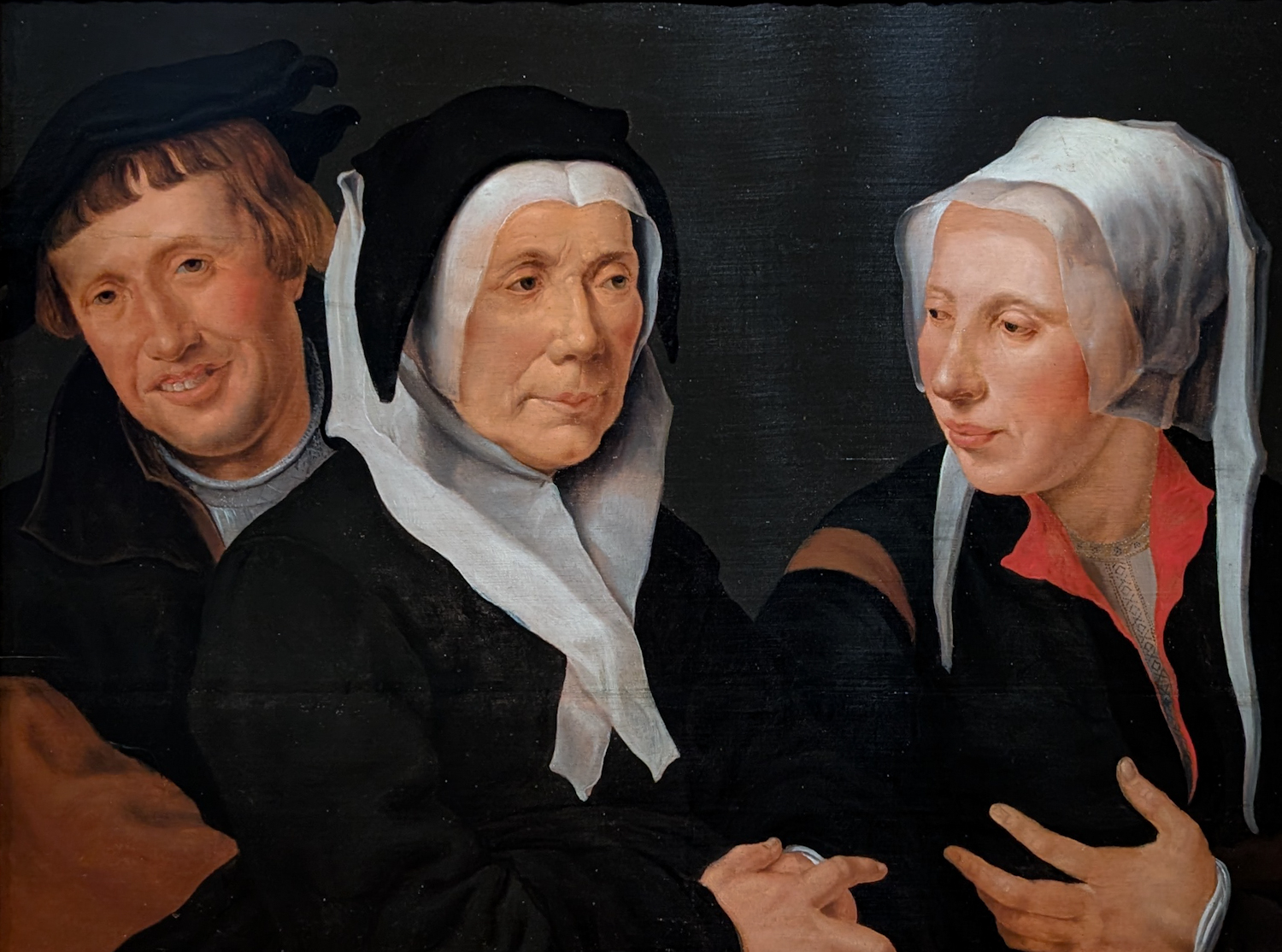
Maarten van Heemskerck 1498 - 1574
Genre Scene
1526
A young woman gestures to an older woman. The young man on the left grins at us. What is there to laugh about? This is one of the earliest depictions of the daily life of ordinary people. It is unique, amidst all the religious images and portraits produced in the early 16th century. 'Genre scenes' such as this beame very popular in Holland in the 17th century, and many were produced in Haarlem.
Maarten van Heemskerck 1498 - 1574
Genre Scene
1526
A young woman gestures to an older woman. The young man on the left grins at us. What is there to laugh about? This is one of the earliest depictions of the daily life of ordinary people. It is unique, amidst all the religious images and portraits produced in the early 16th century. 'Genre scenes' such as this beame very popular in Holland in the 17th century, and many were produced in Haarlem.
Maarten van Heemskerck 1498 - 1574
Genre Scene
1526
A young woman gestures to an older woman. The young man on the left grins at us. What is there to laugh about? This is one of the earliest depictions of the daily life of ordinary people. It is unique, amidst all the religious images and portraits produced in the early 16th century. 'Genre scenes' such as this beame very popular in Holland in the 17th century, and many were produced in Haarlem.
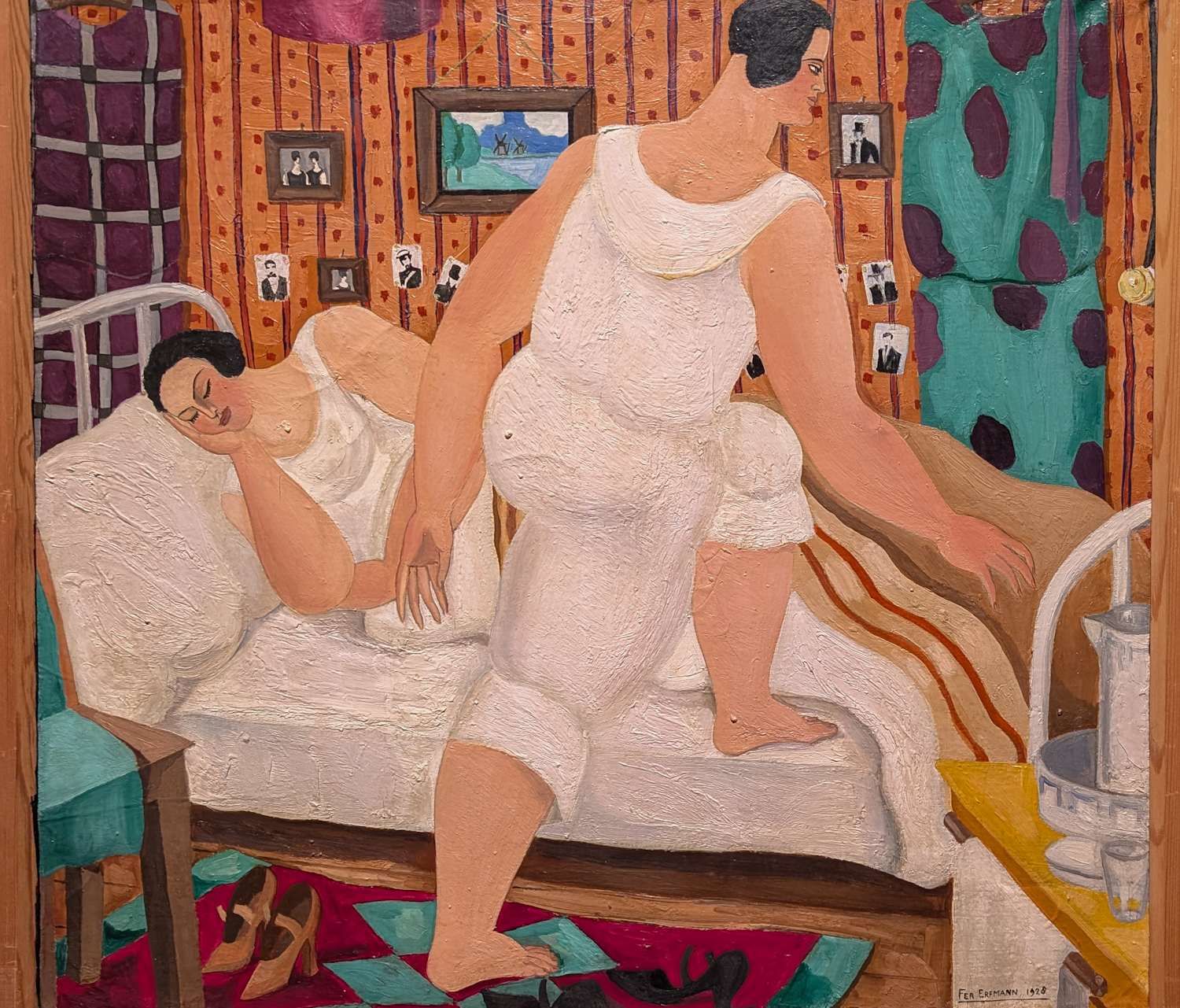
Ferdinand Erfmann
1901 - 1968
Women in a Bedroom, 1928
Two women are about to go to bed in their shared bedroom - as shown by their dresses and the portraits on the wall. Male artists often portray relationships between two women in a sexualised way. But that is not the case here - these women simply are. This was Ferdinand Erfmann's way of criticising heteronormality. His art and personal life were intimately connected. He painted mainly during the night, often in drag. In his work he sought to abolish the distinction between men and women.
Ferdinand Erfmann
1901 - 1968
Women in a Bedroom, 1928
Two women are about to go to bed in their shared bedroom - as shown by their dresses and the portraits on the wall. Male artists often portray relationships between two women in a sexualised way. But that is not the case here - these women simply are. This was Ferdinand Erfmann's way of criticising heteronormality. His art and personal life were intimately connected. He painted mainly during the night, often in drag. In his work he sought to abolish the distinction between men and women.
Ferdinand Erfmann
1901 - 1968
Women in a Bedroom, 1928
Two women are about to go to bed in their shared bedroom - as shown by their dresses and the portraits on the wall. Male artists often portray relationships between two women in a sexualised way. But that is not the case here - these women simply are. This was Ferdinand Erfmann's way of criticising heteronormality. His art and personal life were intimately connected. He painted mainly during the night, often in drag. In his work he sought to abolish the distinction between men and women.
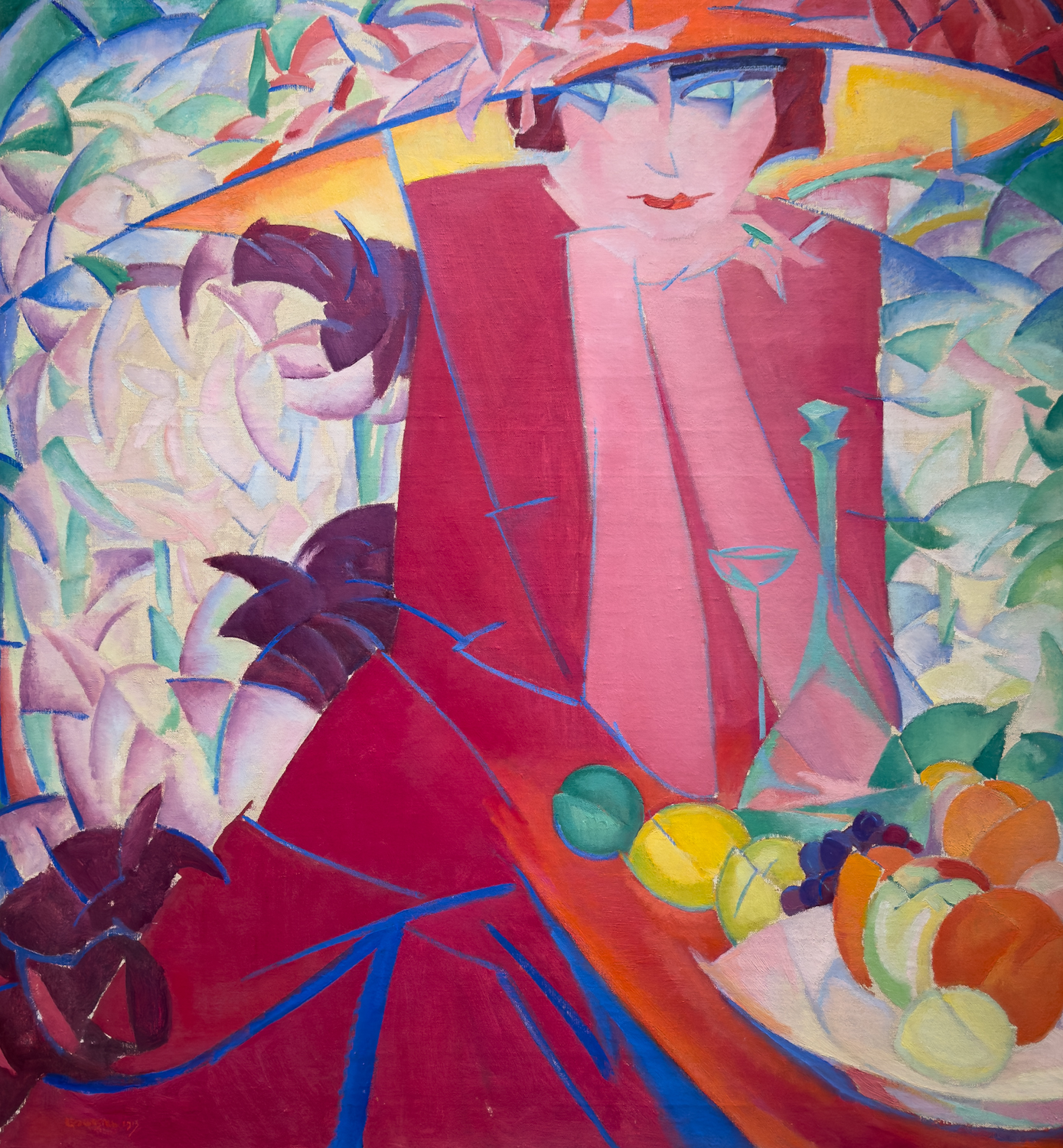
Leo Gestel
1881 - 1941
Woman in a Large Hat in a Summer House, 1913
This is most likely Else Berg, a fellow artist and friend of Leo Gestel's. The painters, who knew each other from Amsterdam, worked together in Bergen, a village in North Holland popular with artists. Berg is holding a cigarette, which many considered unwomanlike and controversial at the time. Her boldness suited Gestel's experimental style perfectly - his brightly coloured painting is more an exercise in the latest angular style of the Cubist movement than a lifelike portrait.
Leo Gestel
1881 - 1941
Woman in a Large Hat in a Summer House, 1913
This is most likely Else Berg, a fellow artist and friend of Leo Gestel's. The painters, who knew each other from Amsterdam, worked together in Bergen, a village in North Holland popular with artists. Berg is holding a cigarette, which many considered unwomanlike and controversial at the time. Her boldness suited Gestel's experimental style perfectly - his brightly coloured painting is more an exercise in the latest angular style of the Cubist movement than a lifelike portrait.
Leo Gestel
1881 - 1941
Woman in a Large Hat in a Summer House, 1913
This is most likely Else Berg, a fellow artist and friend of Leo Gestel's. The painters, who knew each other from Amsterdam, worked together in Bergen, a village in North Holland popular with artists. Berg is holding a cigarette, which many considered unwomanlike and controversial at the time. Her boldness suited Gestel's experimental style perfectly - his brightly coloured painting is more an exercise in the latest angular style of the Cubist movement than a lifelike portrait.