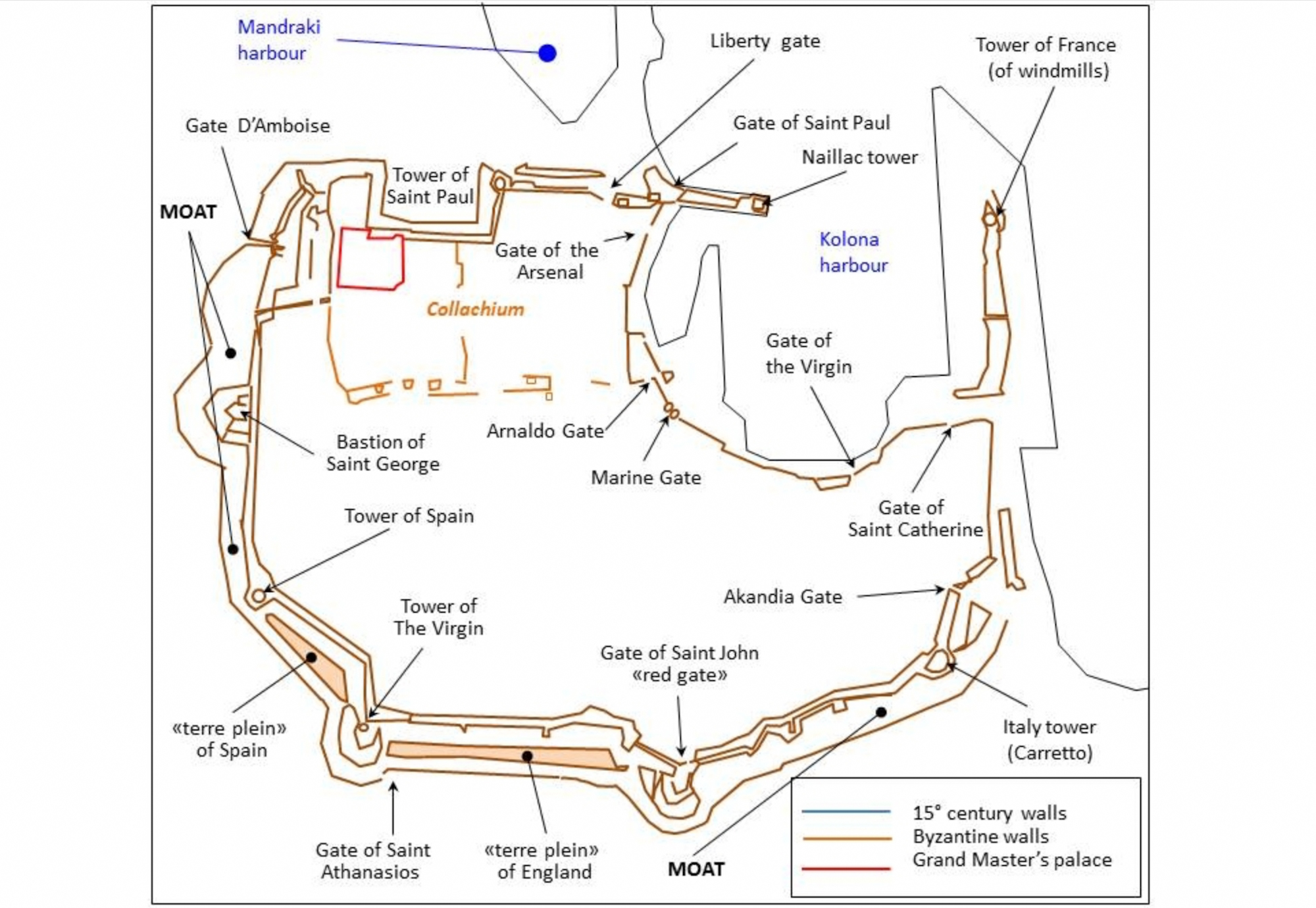
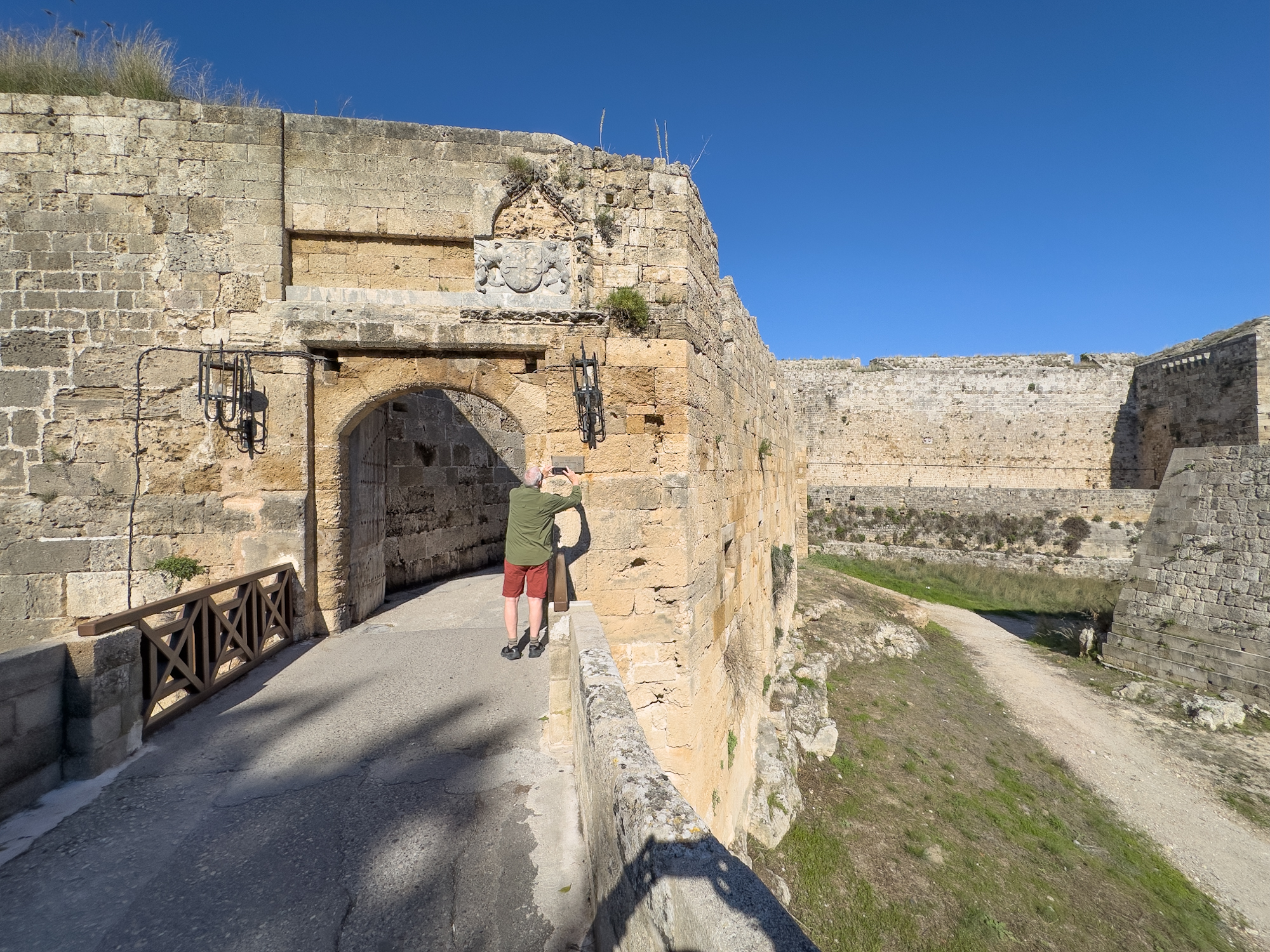
Constructed around 1441, this gate is linked to the Ottoman conquest. Legend says that Suleiman the Magnificent entered Rhodes through here in 1522. The Sultan subsequently ordered the gate to be sealed to prevent any future conqueror from following his path. It remained closed until 1922, when it was reopened by the Italians.
Constructed around 1441, this gate is linked to the Ottoman conquest. Legend says that Suleiman the Magnificent entered Rhodes through here in 1522. The Sultan subsequently ordered the gate to be sealed to prevent any future conqueror from following his path. It remained closed until 1922, when it was reopened by the Italians.
Constructed around 1441, this gate is linked to the Ottoman conquest. Legend says that Suleiman the Magnificent entered Rhodes through here in 1522. The Sultan subsequently ordered the gate to be sealed to prevent any future conqueror from following his path. It remained closed until 1922, when it was reopened by the Italians.
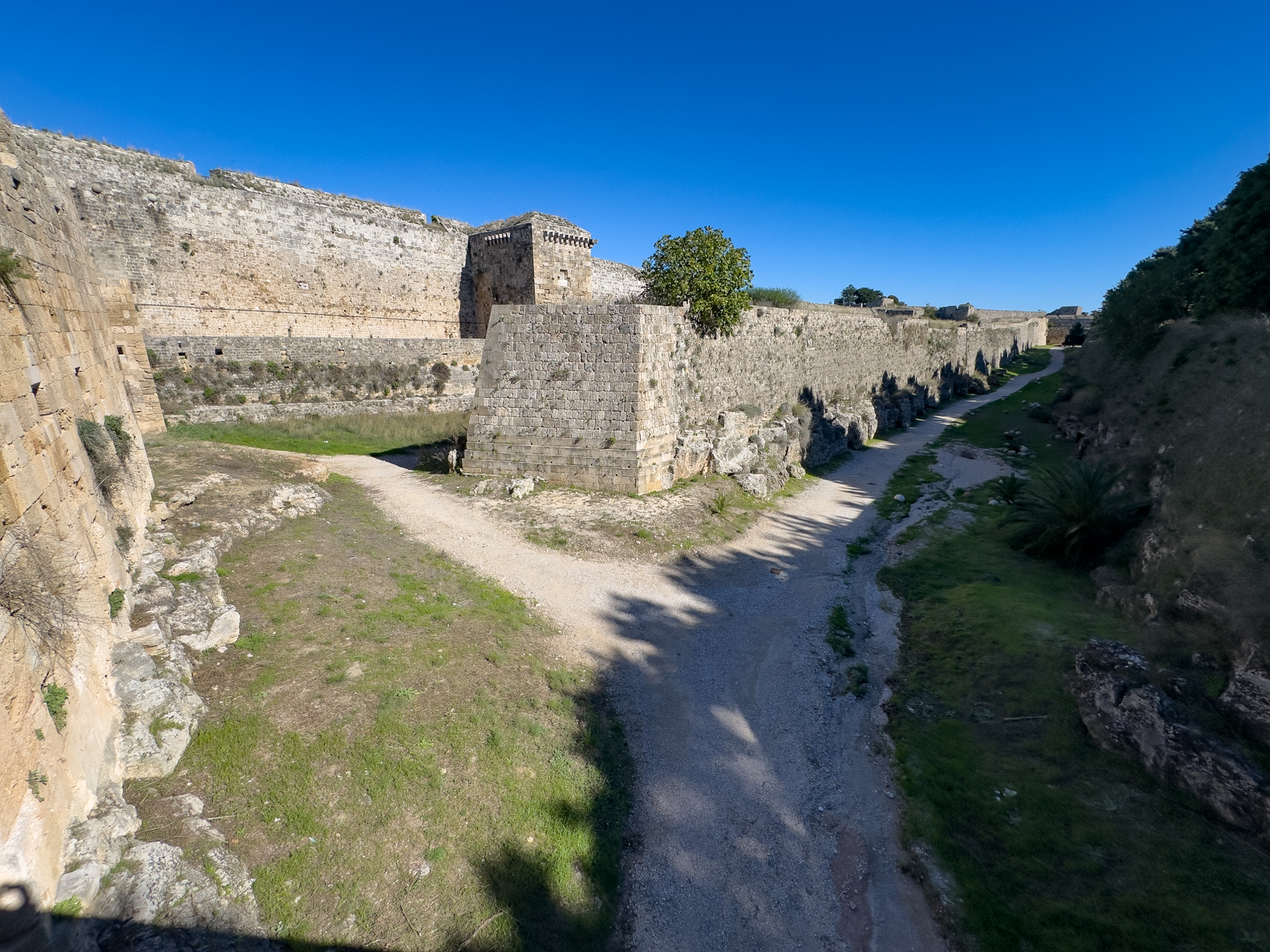
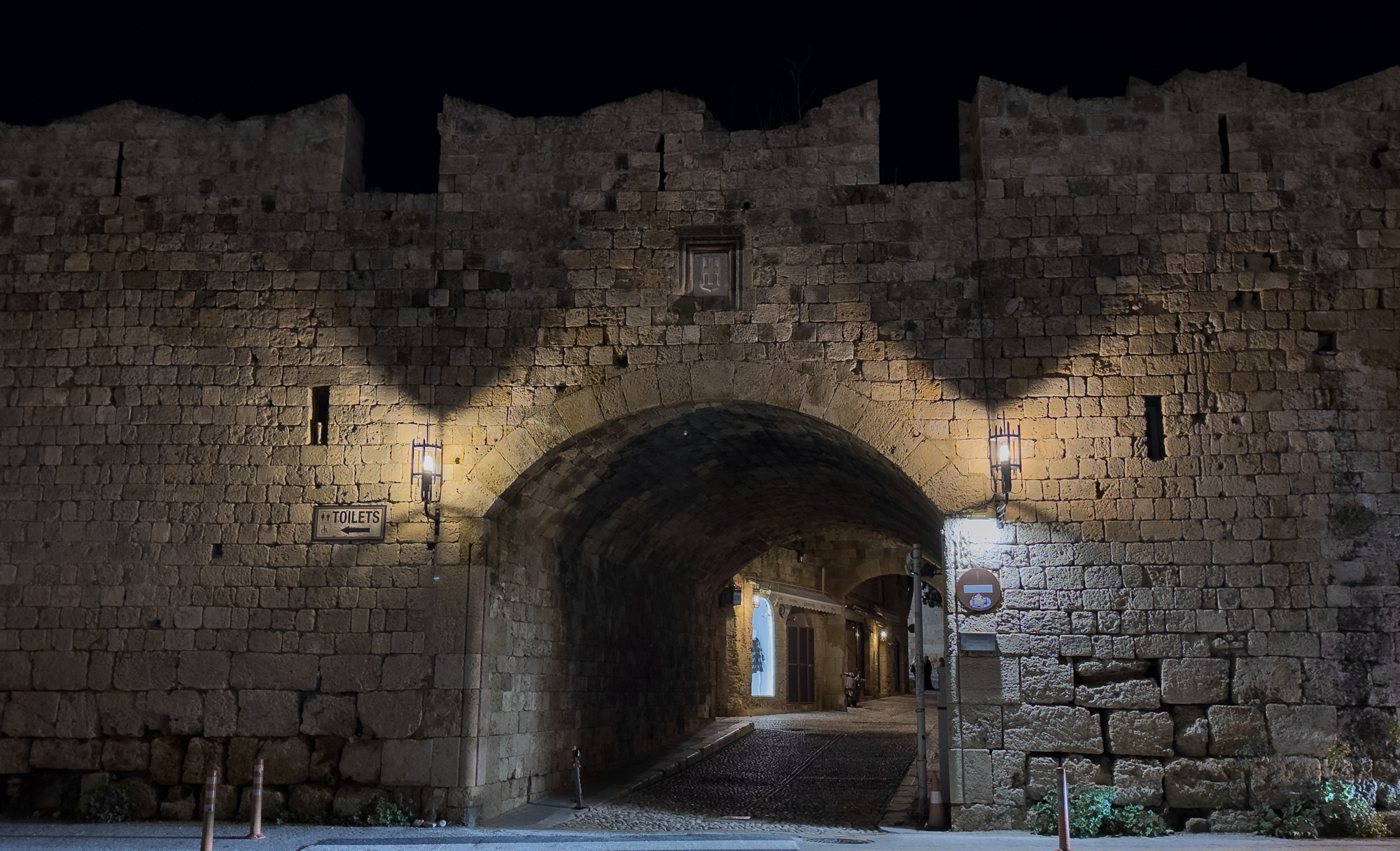
A smaller, functional gate providing access to the New Hospital of the Knights.
A smaller, functional gate providing access to the New Hospital of the Knights.
A smaller, functional gate providing access to the New Hospital of the Knights.
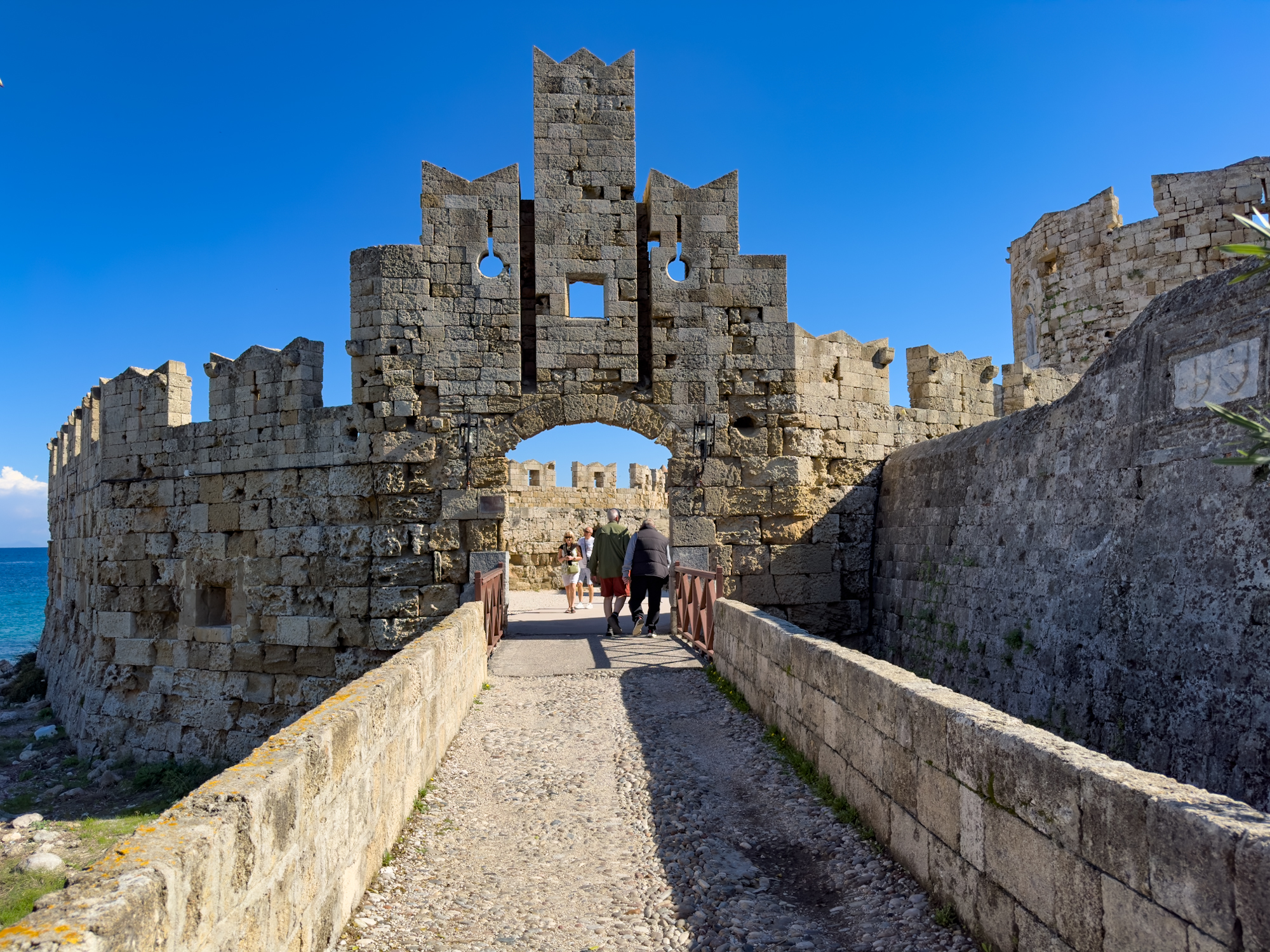
Constructed in the late 15th century to control access to the Kolona harbor. It was almost entirely destroyed during WWII bombardments and was meticulously reconstructed in 1951.
Constructed in the late 15th century to control access to the Kolona harbor. It was almost entirely destroyed during WWII bombardments and was meticulously reconstructed in 1951.
Constructed in the late 15th century to control access to the Kolona harbor. It was almost entirely destroyed during WWII bombardments and was meticulously reconstructed in 1951.
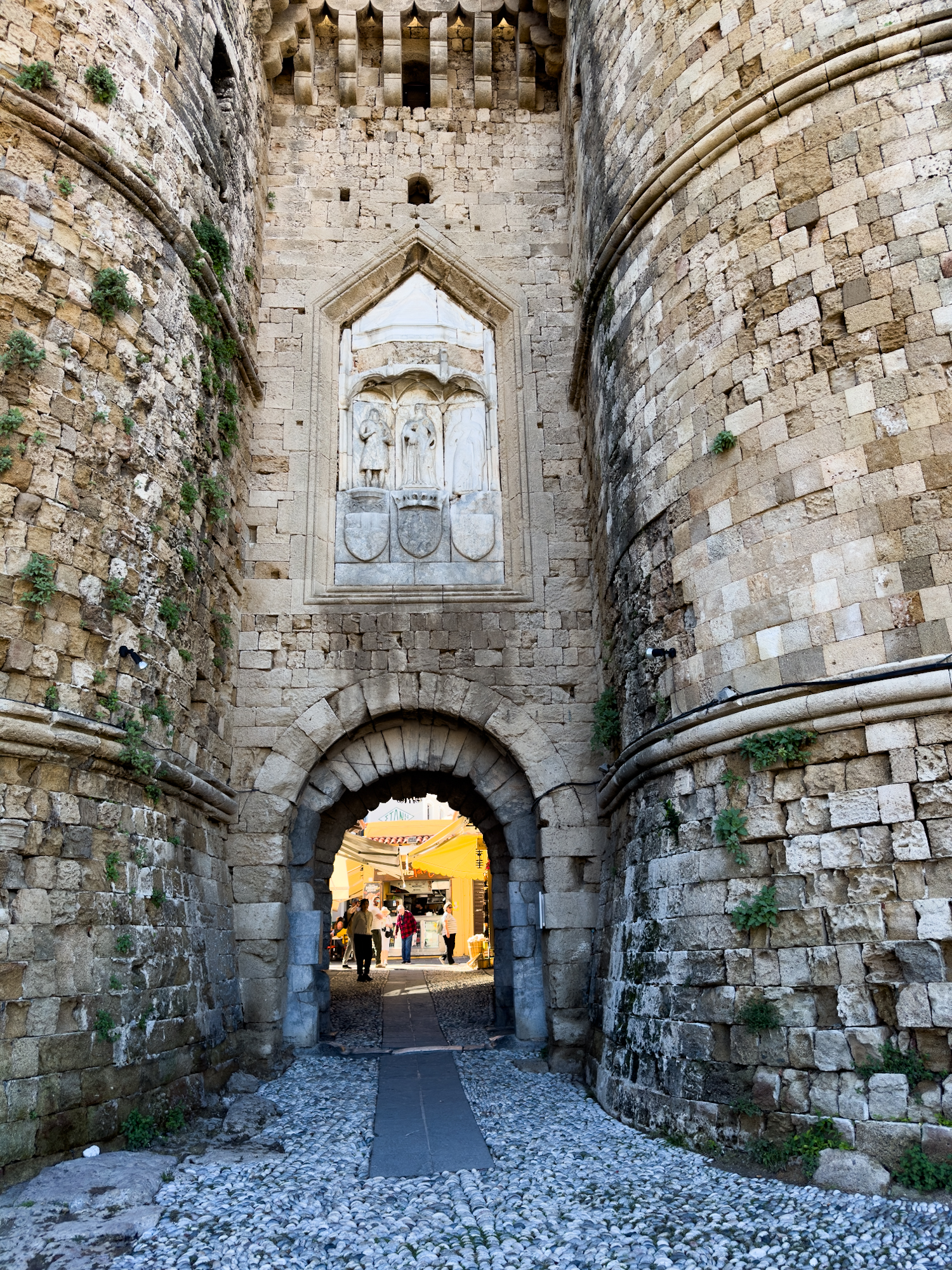
The main ceremonial entrance from the harbor. Its towers were built more for prestige than defence, as the space between the sea and the walls was too narrow for a land-based assault. It was restored in 1951 after WWII damage.
The main ceremonial entrance from the harbor. Its towers were built more for prestige than defence, as the space between the sea and the walls was too narrow for a land-based assault. It was restored in 1951 after WWII damage.
The main ceremonial entrance from the harbor. Its towers were built more for prestige than defence, as the space between the sea and the walls was too narrow for a land-based assault. It was restored in 1951 after WWII damage.
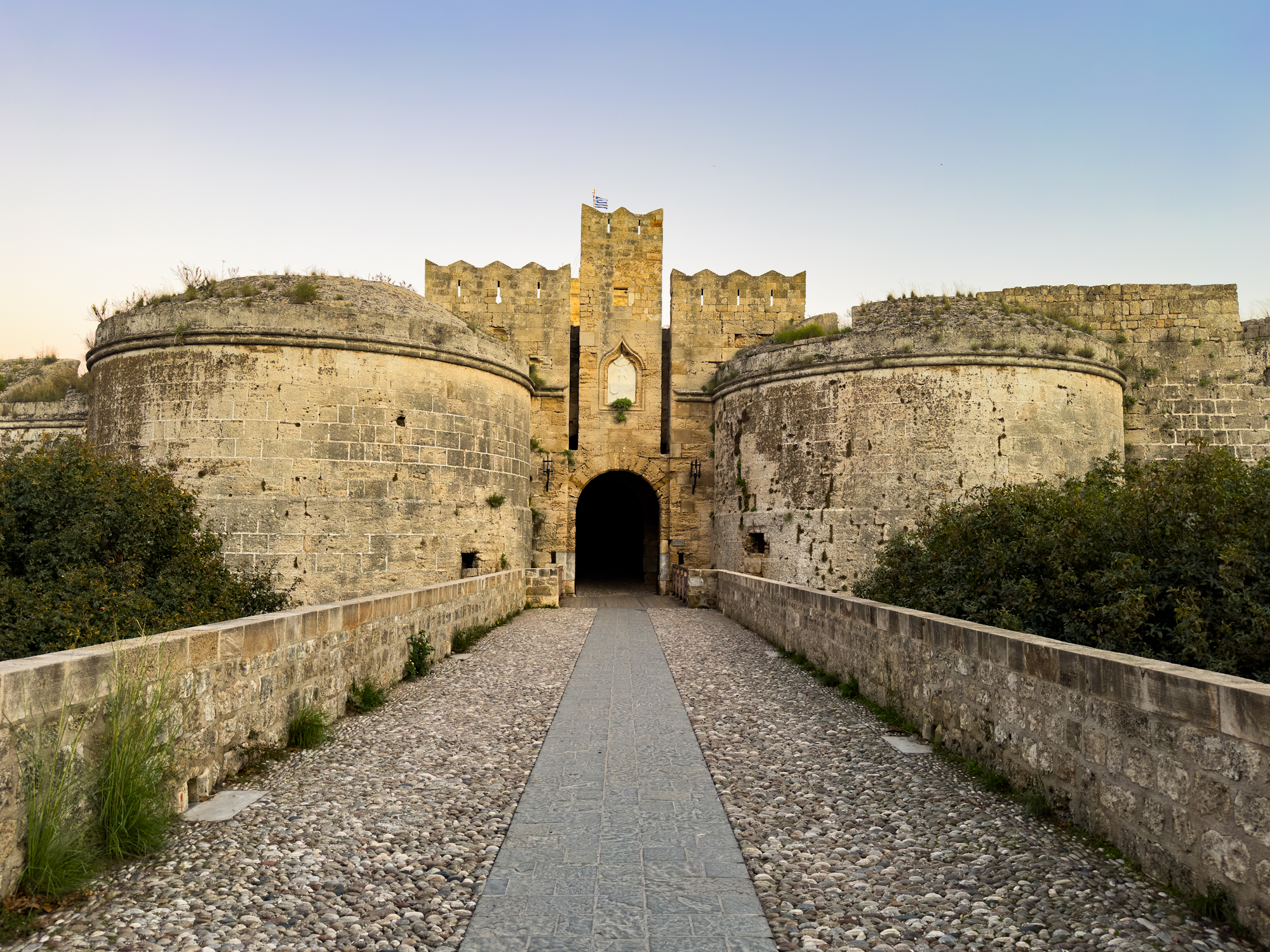
This gate features a triple defensive zone, two massive round towers, and a roofed entrance. Built by Grand Master d’Amboise in 1512, it was designed to withstand the heaviest artillery of the era.
This gate features a triple defensive zone, two massive round towers, and a roofed entrance. Built by Grand Master d’Amboise in 1512, it was designed to withstand the heaviest artillery of the era.
This gate features a triple defensive zone, two massive round towers, and a roofed entrance. Built by Grand Master d’Amboise in 1512, it was designed to withstand the heaviest artillery of the era.
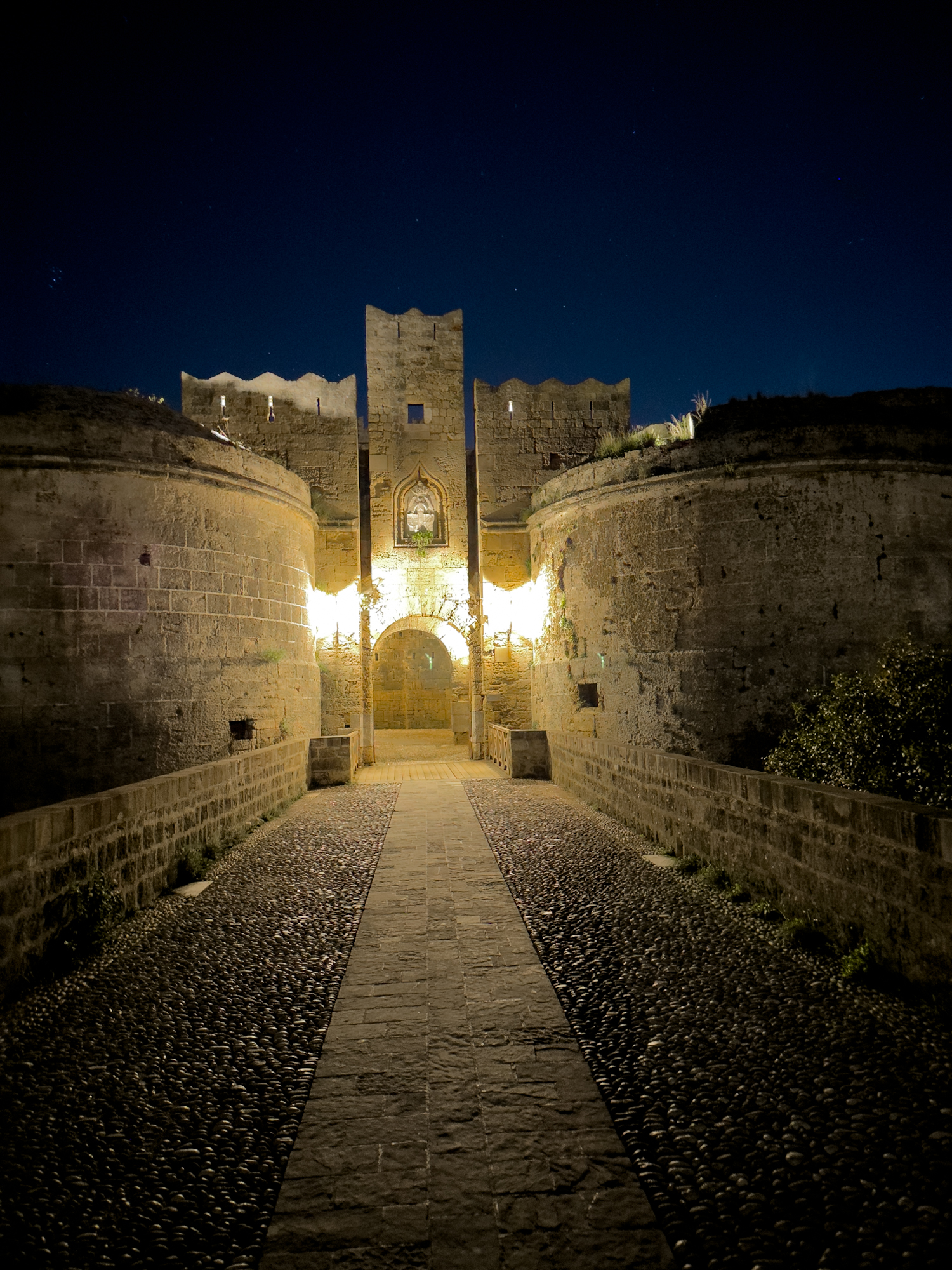
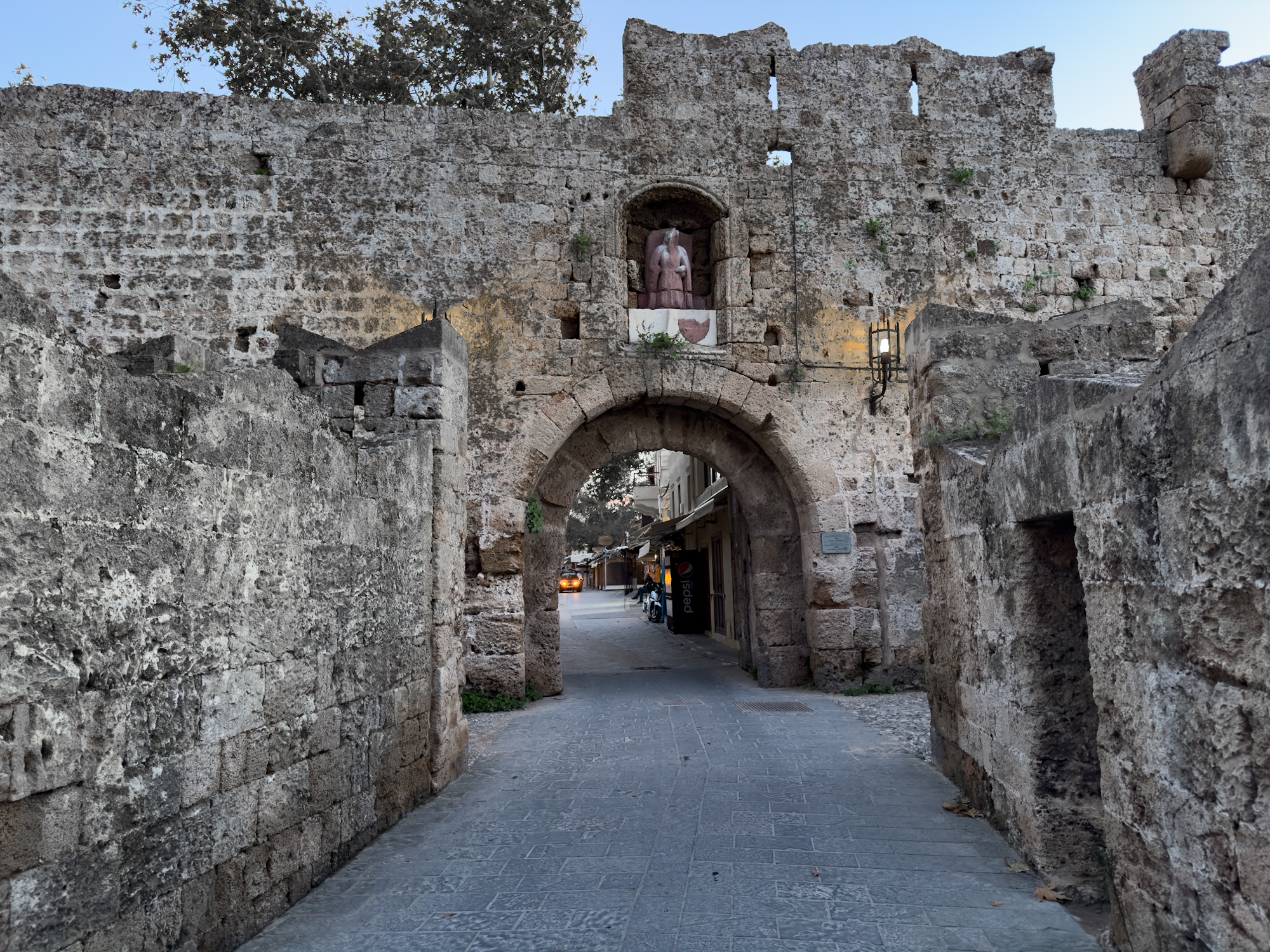
Akandia Gate: TBD. A more modern addition, opened by the Italian administration in 1935. It was created to facilitate traffic between the commercial port and the southeastern part of the city, bypassing the narrow medieval center.
Gate of St John: TBD. Commonly known as Kokkini Porta (the Red Gate). Tradition holds that during the bloody siege of 1522, the stones were stained red by the sheer number of fallen soldiers. It was heavily fortified by Grand Master d'Aubusson to protect the southern perimeter.
Catherines Gate: TBD. Also known as the Gate of the Windmills. It historically served as the passage for merchants moving from the commercial "Burgh" to the grain mills located on the harbor's edge.
Virgin Mary Gate. TBD. Named after the nearby Church of Our Lady of the Burgh. Although planned by the Italians for urban traffic, it was officially opened by the Greek administration in 1955. It offers a scenic entry point near the ruins of the Gothic church.
Tarsanas Gate. TBD. Built in the 14th century, its name refers to the naval shipyards (Tarsanas). Above the gate, the coat of arms of Grand Master Heredia is still visible. It connects the Kolona Port with the modern city. <./p>
Liberty Gate. TBD. The youngest gate, opened in 1924 by the Italians. Despite its modern origin, it was designed in a Neo-Gothic style to respect the medieval surroundings. It serves as the primary link between Mandraki harbor and the Old Town.